

One of the most important questions patients ask before starting stem cell therapy is:
When will I see results?
The answer depends on several factors, including the type of stem cells used, the condition being treated, your overall health, and the goals of therapy—such as reducing inflammation, improving function, or supporting tissue repair¹⁴,¹⁸.
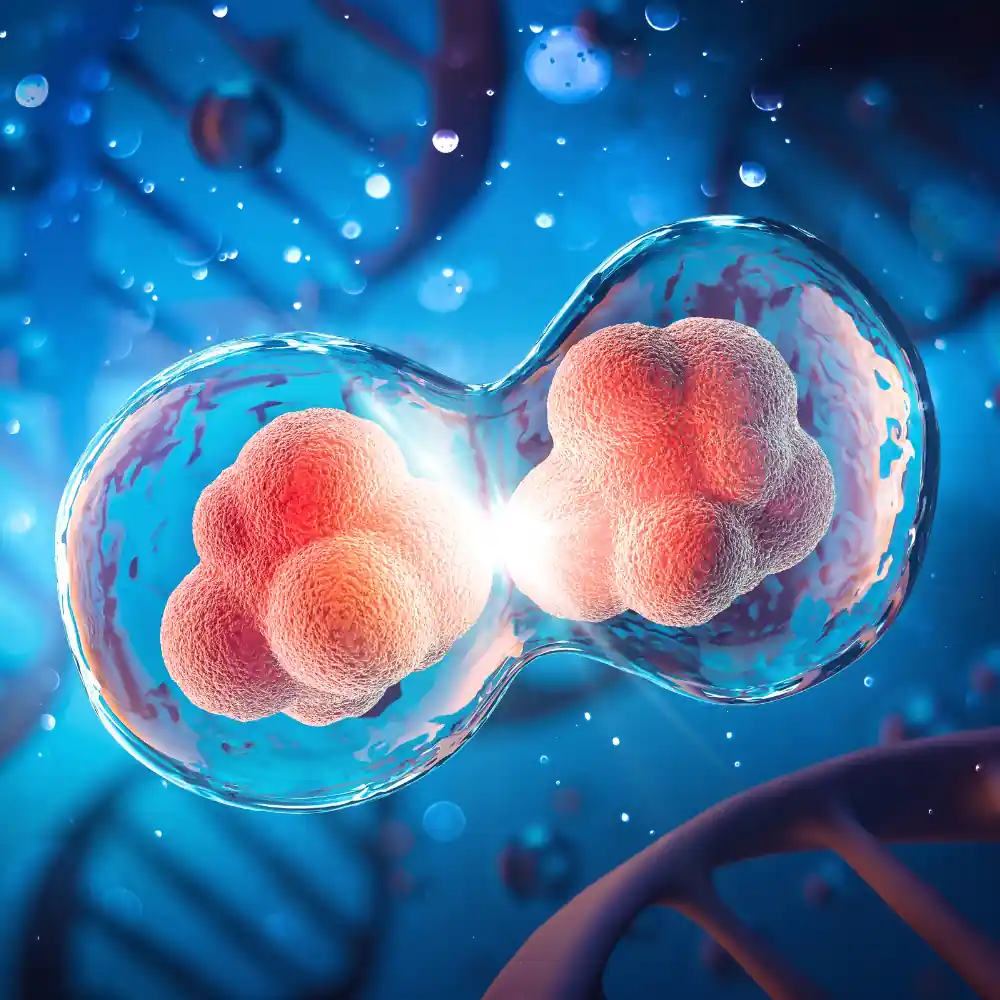
Understanding Mesenchymal Stem Cells (MSCs)
Mesenchymal stem cells (MSCs) are naturally occurring cells in the body that play an important role in healing and repair. They can develop into different types of tissues, including bone, cartilage, fat, and muscle¹⁹–²².
Where Do MSCs Come From?
MSCs can be obtained from several sources, including:
- Bone marrow
- Adipose (fat) tissue
- Umbilical cord
- Placenta
- Other tissues such as dental pulp and skin
At our clinic, we primarily use umbilical cord–derived MSCs, selected based on their biological properties and regenerative potential as described in current research²³–²⁷.
How Stem Cell Therapy Works

Stem cell therapy supports healing through several biological mechanisms:
- Tissue repair: MSCs can differentiate into specialized cells
- Immune system regulation: They modulate immune responses
- Anti-inflammatory effects: They release signaling molecules that reduce inflammation
- Homing ability: They migrate to sites of injury
These mechanisms are supported by a growing body of evidence in regenerative medicine¹⁹–²⁷.
Why Results Take Time
Stem cell therapies act by influencing underlying biological processes such as immune modulation, inflammation control, and tissue repair¹⁴,¹⁸.
These processes take time to develop, which is why clinical effects are gradual and vary between patients. Early biological effects have been observed in preclinical models within days¹⁴,¹⁵.
When Will You See Results?
While every patient is different, clinical evidence suggests a general timeline:
Early Phase (Days to Weeks)
- Initial biological responses begin
- Typically no immediate noticeable changes¹⁴,¹⁵
Initial Improvements (1–3 Months)
- Early symptom improvements may appear
- Functional gains may begin
Noticeable Results (3–6 Months)
- Improvements in pain and function, particularly in orthopedic conditions¹¹,¹²
Continued Progress (6–12 Months)
- Consolidation of clinical outcomes
- Ongoing tissue repair
Long-Term Outcomes (12–18+ Months)
- Structural changes may be observed
- Benefits may persist or decline over time depending on the condition¹³
What About Specific Conditions?
Orthopedic Conditions
- Improvements typically seen within 3–6 months
- Continued progress over time¹¹–¹³
Cardiovascular Conditions
- Improvements may occur within the first few months
- Long-term benefits reported in some studies⁹,¹⁰
Ischemic Stroke
- Outcomes typically assessed at 90 days¹⁶,¹⁷
- Early biological effects observed preclinically¹⁴,¹⁵
- Not currently part of standard treatment
Hematologic Conditions
-
- 2–4 weeks: Blood cell recovery²
- 2–3 months: Early immune reconstitution⁴,⁵
- 6–12 months: Clinical recovery⁷
- 1–2 years: More complete immune recovery¹,⁶,⁸
Safety and Current Evidence
Extensive research suggests that MSC therapy has a favorable safety profile.
Meta-analyses and clinical studies have shown:
- No increased risk of serious adverse events
- No association with infection, malignancy, or mortality²⁸–³¹
Clinical applications continue to be studied across multiple conditions²⁶,²⁷,³².
Most side effects are mild and temporary.
Setting Realistic Expectations
Stem cell therapy:
- Does not provide immediate results
- Does not guarantee complete recovery
- Does not replace standard medical treatments
Outcomes vary between individuals.
Important Considerations
- Not all patients are candidates
- Individual responses vary
- Treatment quality matters
- Many applications remain investigational²⁶,²⁷,³²
A proper medical evaluation is essential before treatment.
The Bottom Line
Stem cell therapy is a promising and evolving field of regenerative medicine. While results are not immediate, many patients experience gradual improvements over time.
Understanding the timeline, potential benefits, and limitations helps set realistic expectations and supports informed decision-making.
References
- Guilcher GMT, Rivard L, Huang JT, et al. Lancet Child Adolesc Health.
- Anasetti C, Logan BR, Lee SJ, et al. N Engl J Med. 2012.
- Gu Y, Du S, Yang Y, Ding J. Front Med. 2025.
- Nguyen KB, Nguyen NTH, Vo BTT, Nguyen TH. Transplant Proc. 2026.
- Park BG, Park CJ, Jang S, et al. Leuk Res. 2015.
- Storek J, Geddes M, Khan F, et al. Semin Immunopathol. 2008.
- Lee SJ, Fairclough D, Parsons SK, et al. J Clin Oncol. 2001.
- Savani BN, Tichelli A. Blood Marrow Transplant Long Term Manag. 2021.
- Strauer BE, Steinhoff G. J Am Coll Cardiol. 2011.
- Chen Y, Teng X, Chen W, et al. Sci China Life Sci. 2014.
- Whittle SL, Johnston RV, McDonald S, et al. Cochrane Database Syst Rev. 2025.
- Hunter CW, Deer TR, Jones MR, et al. J Pain Res. 2022.
- Spasovski D, Spasovski V, Bascarevic Z, et al. J Clin Med. 2024.
- Li X, Huang M, Zhao R, et al. Cell Physiol Biochem. 2018.
- Nam HS, Kwon I, Lee BH, et al. PLoS One. 2015.
- Boncoraglio GB, Ranieri M, Bersano A, et al. Cochrane Database Syst Rev. 2019.
- Houkin K, Osanai T, Uchiyama S, et al. JAMA Neurol. 2024.
- Hoseinzadeh A, Esmaeili SA, Sahebi R, et al. Stem Cell Res Ther. 2025.
- Naji A, Eitoku M, Favier B, et al. Cell Mol Life Sci. 2019.
- Pharoun J, Berro J, Sobh J, et al. Eur J Pharmacol. 2024.
- Lou S, Duan Y, Nie H, et al. Biochimie. 2021.
- Ebrahimi F, Pirouzmand F, Cosme Pecho RD, et al. Biotechnol Prog. 2023.
- Kobolak J, Dinnyes A, Memic A, Khademhosseini A, Mobasheri A. Methods. 2016.
- Tavakoli S, Ghaderi Jafarbeigloo HR, Shariati A, et al. J Cell Physiol. 2020.
- Han X, Liao R, Li X, et al. Signal Transduct Target Ther. 2025.
- Margiana R, Markov A, Zekiy AO, et al. Stem Cell Res Ther. 2022.
- Zhidu S, Ying T, Rui J, Chao Z. Stem Cell Res Ther. 2024.
- Wang Y, Yi H, Song Y. Stem Cell Res Ther. 2021.
- Lalu MM, McIntyre L, Pugliese C, et al. PLoS One. 2012.
- Rodríguez-Fuentes DE, Fernández-Garza LE, Samia-Meza JA, et al. Arch Med Res. 2021.
- Matsuoka T, Itohara T, Hara Y, Kobayashi N. J Clin Med. 2024.
- Patel GD, Liu L, Li A, et al. Front Med. 2023.
Ready to learn more about stem cell therapy?

At Stemwell, our team of doctors are highly skilled in successfully supporting thousands of people with a range of stem cell treatments. If you would like to learn more about stem cell therapy you can contact us with any questions, or apply today to check your eligibility.
