

A diagnosis of osteoporosis, or the suspicion of one, tends to bring worry and a long list of questions. People want to know what they can do day to day, what scientists are testing and how safe those approaches are. Recent research offers solid answers to some of these questions and hopeful signals on others.

Understanding Osteoporosis
How Common It Is
A diagnosis of osteoporosis, or the suspicion of one, tends to bring worry and a long list of questions. People want to know what they can do day to day, what scientists are testing and how safe those approaches are. Recent research offers solid answers to some of these questions and hopeful signals on others.
What Happens in the Bone
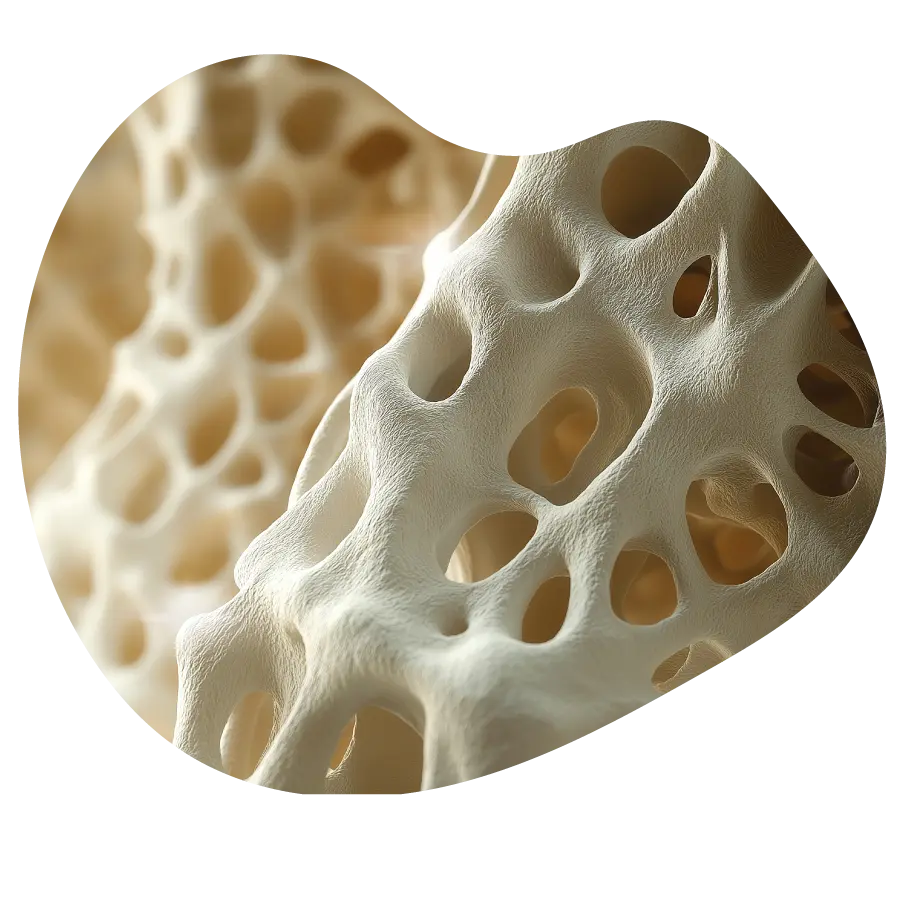
In osteoporosis, bone breakdown by cells called osteoclasts outpaces bone formation by cells called osteoblasts, and the skeleton ends up with less bone and a weaker internal structure [3]. Sometimes a specific cause is behind it, such as an excess of the hormone cortisol or prolonged immobilization, while in other cases it follows menopause or advancing age [3].
Assessing Risk and Protecting Bone
Fracture Risk
The UK national guideline covers fracture risk assessment for postmenopausal women and men aged 50 and older [4]. A US clinical guide notes that patients at risk are often not screened and not informed about prevention [5]. A conversation with a physician is the natural place to start.
Advances in Early Detection
Advances in blood-based biomarkers are changing the evaluation of Alzheimer’s disease. Certain biomarkers, particularly plasma phosphorylated tau such as p-tau217, have demonstrated high accuracy for identifying Alzheimer’s-related amyloid and tau pathology in research and selected clinical settings [6,7]. Their interpretation depends on the specific assay, validated thresholds, clinical setting, patient characteristics, and other factors.
Daily Habits
- Several everyday habits have support in recent research.
- Avoiding smoking and excessive alcohol is part of clinical guidance for prevention [5].
- Healthy eating patterns were associated with a lower risk of hip fracture in a systematic review of observational studies, although results for bone density and total fractures were conflicting [6].
- Regular exercise produced a small but significant gain in bone density at the spine and hip across 75 studies in postmenopausal women [7]. The authors linked the small size largely to differences among programs [7].
- Preventing falls and staying physically active are recommended for every older adult in world guidelines, which also advise identifying fall risk among those living in the community [8].
Vitamin D Supplements
Low vitamin D levels are listed as a risk factor for osteoporosis and fractures [5]. For adults aged 50 and older, the clinician’s guide recommends vitamin D supplementation as needed to maintain adequate levels [5]. Supplementation may therefore be a useful strategy, and a physician can check vitamin D levels to determine whether it is needed and when to start [5]. Decisions about supplements or medication are best made with a physician.

The Role of Regenerative Medicine
How Stem Cells Could Help
Mesenchymal stem cells can renew themselves and mature into several cell types, and they can be obtained from bone marrow or fat tissue [3]. In osteoporosis, the ability of these cells to become bone-forming cells is weakened [3]. Transplanting cells with better bone-forming ability has been proposed as a way to restore the balance between bone formation and breakdown [3]. They may act by becoming bone-forming cells themselves and by releasing signals that help rebalance the bone environment and regulate the immune response [3].
What Research Shows So Far
In a combined analysis of 13 studies in rats, bone density was higher after stem cell transplantation than in untreated animals, although still below that of healthy animals [10]. The authors called for high-quality randomized trials, in which participants are assigned to treatment or comparison by chance [10]. Extracellular vesicles, small particles released by stem cells, are being studied as an alternative to transplanting the cells themselves [11]. A review of animal studies reported improvements, along with differences between studies and signs that positive results were published more often [11].
Safety and Evidence
In 2026, a first-in-human trial reported in Cell gave ten women with advanced osteoporosis a single infusion of their own bone marrow stem cells [11]. The cells had been modified in the laboratory to help them reach bone [11]. No serious adverse events were attributed to the infusion [11].
Fragility fractures, those caused by minor impacts, fell by 94% over two years compared with the period before the infusion [11]. The study had no control group, and most participants continued conventional treatment [11]. The authors state that the fracture reduction cannot yet establish efficacy, and larger trials with control groups are needed [11]. Stem cell approaches remain investigational and do not constitute a treatment or a cure for osteoporosis.
Conclusion and Guidance
The potential of regenerative medicine for bone is considerable, and the first results in people justify continued study. Larger trials will show whether the findings hold, and longer follow-up will clarify the safety of the approach.
Anyone concerned about their bone health or at risk of fractures can consult a physician about personal risk, daily habits and whether further evaluation is appropriate.
Speak to Stemwell today to find out more

Stem cell therapy represents an exciting new treatment avenue for hamstring injuries, with the potential to promote quicker healing and improve your overall quality of life. Our expert team at Stemwell are dedicated to supporting you and finding the right treatment option to meet your needs.
If you would like to find out more about stem cell therapy you can contact us with any questions, or apply today to check your eligibility.
References
1. Xiao PL, Cui AY, Hsu CJ, Peng R, Jiang N, Xu XH, et al. Global, regional prevalence, and risk factors of osteoporosis according to the World Health Organization diagnostic criteria: a systematic review and meta-analysis. Osteoporos Int. 2022;33(10):2137-53. doi:10.1007/s00198-022-06454-3
2. Salari N, Ghasemi H, Mohammadi L, Behzadi MH, Rabieenia E, Shohaimi S, et al. The global prevalence of osteoporosis in the world: a comprehensive systematic review and meta-analysis. J Orthop Surg Res. 2021;16(1):609. doi:10.1186/s13018-021-02772-0
3. Jiang Y, Zhang P, Zhang X, Lv L, Zhou Y. Advances in mesenchymal stem cell transplantation for the treatment of osteoporosis. Cell Prolif. 2021;54(1):e12956. doi:10.1111/cpr.12956
4. Gregson CL, Armstrong DJ, Bowden J, Cooper C, Edwards J, Gittoes NJL, et al. UK clinical guideline for the prevention and treatment of osteoporosis. Arch Osteoporos. 2022;17(1):58. doi:10.1007/s11657-022-01061-5
5. LeBoff MS, Greenspan SL, Insogna KL, Lewiecki EM, Saag KG, Singer AJ, et al. The clinician’s guide to prevention and treatment of osteoporosis. Osteoporos Int. 2022;33(10):2049-102. doi:10.1007/s00198-021-05900-y
6. Nguyen HH, Wu F, Makin JK, Oddy WH, Wills K, Jones G, Winzenberg T. Associations of dietary patterns with bone density and fractures in adults: a systematic review and meta-analysis. Aust J Gen Pract. 2021;50(6):394-401. doi:10.31128/AJGP-02-20-5245
7. Shojaa M, Von Stengel S, Schoene D, Kohl M, Barone G, Bragonzoni L, et al. Effect of exercise training on bone mineral density in post-menopausal women: a systematic review and meta-analysis of intervention studies. Front Physiol. 2020;11:652. doi:10.3389/fphys.2020.00652
8. Montero-Odasso M, van der Velde N, Martin FC, Petrovic M, Tan MP, Ryg J, et al. World guidelines for falls prevention and management for older adults: a global initiative. Age Ageing. 2022;51(9):afac205. doi:10.1093/ageing/afac205
9. LeBoff MS, Chou SH, Ratliff KA, et al. Supplemental vitamin D and incident fractures in midlife and older adults. N Engl J Med. 2022;387(4):299-309. doi:10.1056/NEJMoa2202106
10. Xiong Z, Yi P, Lin J, Qiu S, Shu L, Zhang C. Evaluation of the efficacy of stem cell therapy in ovariectomized osteoporotic rats based on micro-CT and dual-energy X-ray absorptiometry: a systematic review and meta-analysis. Stem Cells Int. 2021;2021:1439563. doi:10.1155/2021/1439563
11. Zhang Y, Liu Y, Wang S, Wang C. Therapeutic effects of mesenchymal stem cell-derived extracellular vesicles in osteoporosis models: a systematic review and meta-analysis of preclinical studies. Front Endocrinol (Lausanne). 2025;16:1625969. doi:10.3389/fendo.2025.1625969
12. Moraleda JM, Linares LF, García-Bernal D, et al. Glycocalyx-edited mesenchymal stem/stromal cell therapy in advanced osteoporosis. Cell. 2026 Sep 11. Online ahead of print. doi:10.1016/j.cell.2026.08.017
