
“Humanity shares a collective dream shaped by individual hopes.”- Miguel Ruiz(1)
For most of us, life’s deepest aspirations are universal: spending time with family, enjoying good health, traveling, feeling at peace, building a future, and living without worry. But when a child is diagnosed with cancer, those dreams change. Suddenly, the aspirations are no longer about the future, they become about the present. About relief from pain, the ability to walk, to play, to smile, and to spend time with loved ones. About having, even for a moment, a “normal” life.
This reality highlights a fundamental truth, pediatric cancer is not only a disease, it is a life-altering condition that demands equally transformative solutions.
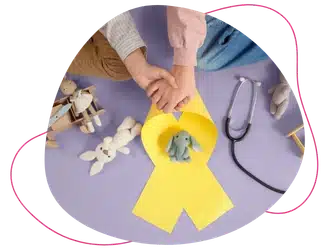
The Global Burden of Pediatric Cancer
Cancer remains one of the leading causes of mortality worldwide, second only to cardiovascular diseases (2). In children, it continues to be a major cause of death, particularly in developed countries, and ranks just after infectious and neonatal causes in developing regions (3,4). Despite medical advances, significant challenges persist:
- Delayed or inaccurate diagnoses
- Limited personalization of treatments
- Variable therapeutic responses
- High toxicity associated with conventional therapies
These gaps emphasize the urgent need for more precise, individualized approaches to care.
DNA Sequencing: A Cornerstone of Precision Medicine

DNA sequencing is transforming modern medicine by allowing us to understand disease at its most fundamental level, the genome. In pediatric oncology, this technology is redefining how we diagnose and treat cancer:
- Improved diagnostic accuracy, enabling precise tumor classification (5,6)
- Targeted therapy selection, aligning treatments with the tumor’s molecular profile (7)
- Prognostic stratification, helping predict disease progression and response (5)
- Identification of genetic predisposition, allowing early detection and family screening (8,9)
This shift from generalized to personalized medicine represents a critical step toward more effective and less harmful treatments.
The Synergy with Regenerative Medicine
The integration of DNA sequencing with regenerative medicine represents a new frontier in pediatric care. By understanding each patient’s unique genetic and molecular profile, therapies such as stem cells, orthobiologics, and advanced biologics can be:
- Precisely indicated
- Biologically tailored
- Optimized for safety and effectiveness
This convergence enhances tissue repair, modulates immune responses, and supports functional recovery(10,11).
Beyond Medicine: The Human Impact
The true value of DNA sequencing goes far beyond clinical outcomes. Every accurate diagnosis and personalized intervention means:
- Less suffering
- Better quality of life
- Increased survival
- More meaningful time with family
Ultimately, it brings children closer to what matters most—the chance to simply be children again. (12)
A New Standard of Care
Precision medicine is no longer optional—it’s becoming essential. Integrating DNA sequencing early in the diagnostic and treatment pathway allows for:
- Faster, more accurate clinical decisions
- Reduction of ineffective treatments
- Better use of healthcare resources
When combined with regenerative medicine, it opens the door to truly comprehensive, patient-centred care.(13)
Implications for Stemwell Regenerative Medicine
At Stemwell Regenerative Medicine, the integration of DNA sequencing into pediatric care represents both a clinical advancement and a strategic vision. This approach enables:
- Personalized regenerative protocols, tailored to each patient’s biology
- Improved outcomes, with greater therapeutic precision
- Enhanced safety, through genetic risk identification
- Leadership in innovation, positioning Stemwell at the forefront of precision medicine
- Long-term impact, potentially transforming disease trajectories and quality of life
DNA sequencing is more than a diagnostic tool—it’s a gateway to precision, to personalization, and to possibility(14). It allows us to align cutting-edge science with something deeply human: the hope that every child can dream again, not just of surviving, but of truly living.
References
- Ruiz M. The Four Agreements: A Practical Guide to Personal Freedom. San Rafael (CA): Amber-Allen Publishing; 1997.
- World Health Organization. Cancer in children [Internet]. Geneva: WHO; 2021 [cited 2026 Mar 26]. Available from: https://www.who.int/news-room/fact-sheets/detail/cancer-in-children
- International Agency for Research on Cancer. Global Cancer Observatory: Cancer Today [Internet]. Lyon: IARC; 2020 [cited 2026 Mar 26]. Available from: https://gco.iarc.fr/today
- National Cancer Institute. Childhood cancers (PDQ®)–Health Professional Version [Internet]. Bethesda: NCI; 2023 [cited 2026 Mar 26]. Available from: https://www.cancer.gov/types/childhood-cancers/hp
- Mody RJ, Wu YM, Lonigro RJ, et al. Integrative clinical sequencing in the management of refractory or relapsed cancer in youth. Nature. 2015;518(7540):521–525.
- Gröbner SN, Worst BC, Weischenfeldt J, et al. The landscape of genomic alterations across childhood cancers. Nature. 2018;555(7696):321–327.
- Parsons DW, Roy A, Plon SE. Clinical tumor sequencing: an emerging standard of care in oncology. J Clin Oncol. 2016;34(24):2928–2937.
- Zhang J, Walsh MF, Wu G, et al. Germline mutations in predisposition genes in pediatric cancer. N Engl J Med. 2015;373(24):2336–2346.
- American Society of Clinical Oncology. Policy statement update: genetic and genomic testing for cancer susceptibility. J Clin Oncol. 2015;33(31):3660–3667.
- Daley GQ. Stem cells and the evolving landscape of regenerative medicine. Cell. 2012;150(5):939–941.
- Trounson A, McDonald C. Stem cell therapies in clinical trials: progress and challenges. Cell Stem Cell. 2015;17(1):11–22.
- Mody RJ, Wu YM, Lonigro RJ, et al. Integrative clinical sequencing in the management of refractory or relapsed cancer in youth. Nature. 2015;518(7540):521–525.
(Supports the human impact of personalized interventions on quality of life and survival.) - Ashley EA. The precision medicine initiative: a new national effort. JAMA. 2015;313(21):2119–2120.
(Supports the essential role of precision medicine in modern healthcare.) - Jameson JL, Longo DL. Precision medicine—personalized, problematic, and promising. N Engl J Med. 2015 Jun 4;372(23):2229-34.
Ready to learn more about stem cell therapy?

At Stemwell, our team of doctors are highly skilled in successfully supporting thousands of people with a range of stem cell treatments. If you would like to learn more about stem cell therapy you can contact us with any questions, or apply today to check your eligibility.

